
Choosing an Ankle Ligament Surgery Hospital in Seoul
When comparing options for ankle ligament surgery in Seoul, focus on how the clinic assesses instability, explains treatment choices, and discusses the reasons surgery may be considered. An ankle that repeatedly gives way can have different causes, so a clear assessment matters before deciding on an operation. Seoul Gunwoo Orthopedic Surgery Clinic provides ankle ligament care and lists ankle ligament repair and reconstruction among its published surgical work. Use a consultation to discuss your symptoms, activity needs, and the clinician’s recommended next steps.
Start with a careful assessment of ankle instability
Ankle instability may follow an injury or repeated sprains, but symptoms alone do not determine whether surgery is needed. During an assessment, the medical team can review how the problem began, how often the ankle gives way, and how it affects walking or activity. Bring a clear account of previous injuries and any care already received. The treatment decision should follow an individual evaluation, not a general assumption that instability always requires surgery.
Before discussing an operation, ask what the assessment suggests about the affected ligaments and what other factors may be contributing to your symptoms. It is also reasonable to ask how the proposed plan relates to your daily activities and goals. If you have records or imaging from earlier care, bring them so the clinician can consider the history in context. A useful consultation explains the clinical reasoning in language you can understand, including why a surgical or non-surgical approach is being discussed. The aim is to leave with a clearer understanding of the next step, rather than a decision made under pressure.
Ankle instability needs an individual assessment because repeated giving way does not automatically mean surgery is required. Ask how the findings relate to your symptoms and why a particular treatment path is being considered.
Understand the surgical options being discussed
Seoul Gunwoo Orthopedic Surgery Clinic lists ankle ligament repair and reconstruction among its published surgical work. These terms describe surgical approaches to ligament problems, but the appropriate option depends on the clinician’s assessment of the individual case. Ask what the proposed procedure is intended to address and how it fits your diagnosis. Clear explanations of the purpose and scope of a procedure help patients make informed decisions.
During a consultation, ask the attending doctor to explain the recommendation in practical terms: which problem the procedure is intended to address, what the treatment plan involves, and what follow-up will be discussed. If repair or reconstruction is proposed, confirm that you understand the distinction as it applies to your case rather than relying on a general description. You can also ask what factors might lead the clinician to consider another approach. This conversation should connect the assessment to the treatment plan and give you an opportunity to raise concerns. Do not assume that a procedure is appropriate solely because it is listed as a service; the recommendation should be based on your individual findings.
Consider the clinic’s ankle care in context
Seoul Gunwoo Orthopedic Surgery Clinic is an orthopedics clinic offering ankle ligament care. Its published surgical work also covers ankle cartilage, ankle arthritis, fractures, Achilles tendon repair, and bunions. This broader ankle and foot focus can be useful when discussing symptoms that may involve more than one structure. Ask which findings relate to your concern and what information will guide the care plan.
Choosing a hospital or clinic is not only about whether a procedure appears on a service list. It is also about whether the consultation addresses your symptoms, diagnosis, and questions in a clear and relevant way. Ask how the medical team will explain the proposed treatment and how you can discuss concerns before making a decision. If you need language assistance, contact the clinic before booking to confirm whether support or interpretation is available. An English website alone does not confirm that an English-speaking clinician or interpreter will be available. Make this practical point part of your preparation, especially if you need medical details explained in English.
| Consultation hours | Availability |
|---|---|
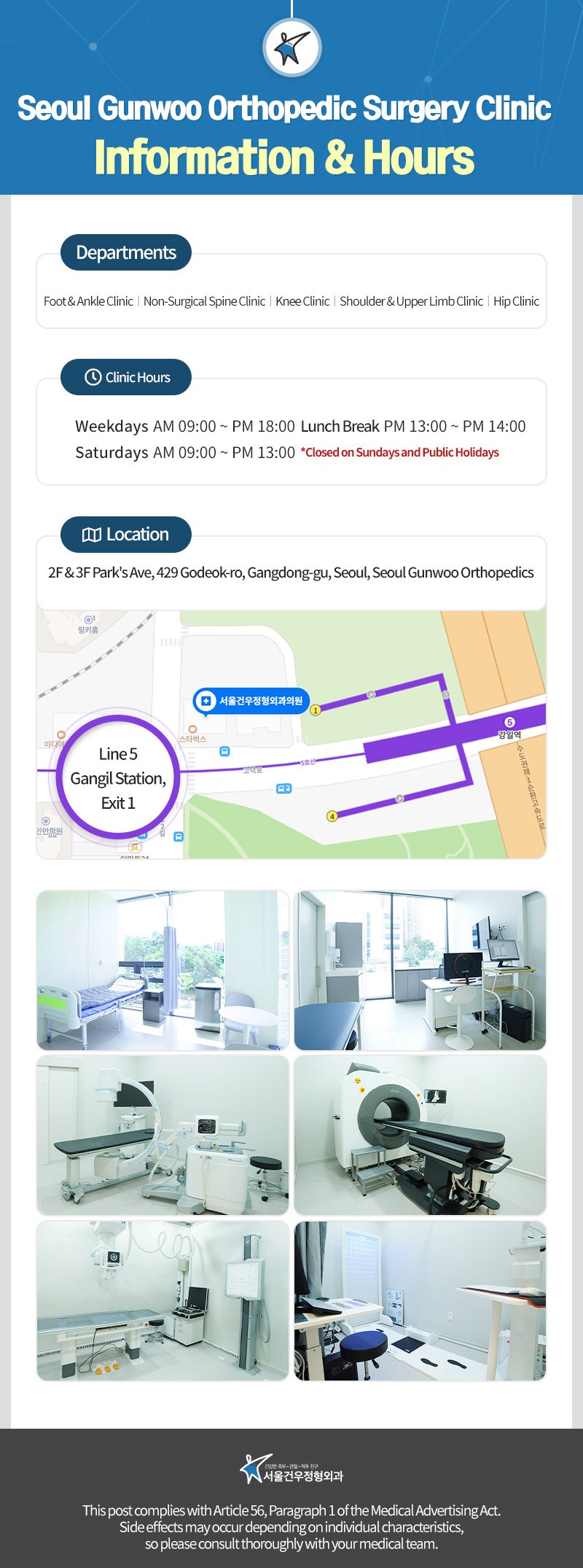
| Monday–Friday | 09:00–18:00 |
| Weekday lunch break | 13:00–14:00 |
| Saturday | 09:00–13:00 |
| Sunday and public holidays | Closed |
Consultation hours are in Korea Standard Time. Before travelling, consider calling the clinic to confirm that the timing works for your visit and to ask about language support if needed. Having your symptom history and questions ready can help keep the conversation focused. The clinic’s location and operating hours are practical details, but they do not replace a clinical discussion about whether an operation suits your condition.
What to Ask an Ankle Ligament Surgery Hospital in Seoul
A productive consultation should connect your symptoms with the assessment and explain the treatment options under consideration. At Seoul Gunwoo Orthopedic Surgery Clinic, ankle ligament care is among the listed services, and the clinic’s published surgical work includes ankle ligament repair and reconstruction. Prepare questions about the diagnosis, the purpose of the recommended approach, and how follow-up will be discussed. Understanding the reasons behind a treatment recommendation is central to making an informed choice.
Discuss your symptoms and activity goals
Describe when your ankle began to feel unstable, whether it gives way repeatedly, and what activities bring on symptoms. Explain any previous sprains or treatment, and mention how the problem affects daily movement. These details help frame the consultation around your situation rather than a general description of ankle ligament problems. If your main concern is returning to a particular activity, say so clearly.
It can help to write down a short timeline before the visit: when symptoms began, how they have changed, and what you have tried so far. Include questions about the assessment and the reasoning behind any proposed treatment. If something is unclear, ask for the explanation in different words rather than leaving with uncertainty. Discuss practical considerations that matter to you, such as the activities you need to manage and what follow-up conversations may involve. There is no need to decide on surgery before understanding the recommendation. A consultation is an opportunity to review the evidence from your assessment and discuss the available next steps.
Bring a concise symptom history and explain how ankle instability affects your daily life. Clear questions help connect the clinical assessment to the treatment options being discussed.
Ask how repair or reconstruction relates to your case
Because the clinic lists both ankle ligament repair and reconstruction as surgical work, ask which approach is being considered and why. The terms alone do not explain whether either option is suitable for a particular patient. Request a plain-language explanation of the condition being treated, the goal of the procedure, and the clinician’s reasoning. This makes the discussion specific to your findings.
You can also ask what the care plan involves beyond the procedure itself, including how the clinic will discuss follow-up and what questions to raise as care progresses. Avoid relying on generalized expectations about recovery or results; individual circumstances matter, and the clinician can explain what is relevant to your case. If you are considering more than one treatment path, ask how each relates to the assessment and what factors inform the recommendation. Make sure you understand the proposed plan before agreeing to proceed. A careful conversation is especially useful when you have ongoing symptoms, have received earlier treatment, or want to understand how the proposed approach fits your activity needs.
Prepare useful information before the visit
Bring any relevant records you already have, along with a clear account of previous ankle injuries and treatments. Write down your main symptoms and questions so important points are not missed during the consultation. If you need interpretation or language assistance, contact Seoul Gunwoo Orthopedic Surgery Clinic before booking to confirm availability. This helps you plan the conversation and appointment appropriately.
Keep your questions focused on the assessment, the reason for the recommended treatment, and what the next steps may involve. You can ask the medical team to clarify unfamiliar terms and explain how the recommendation connects to your symptoms. If you are visiting from outside the area, check the clinic’s address and opening times before setting out. The clinic is near Gangil Station Exit 1, and its consultation schedule includes weekday and Saturday hours. Planning these details in advance leaves more time to focus on the medical discussion once you arrive.
There is no single checklist that fits every consultation, but a short set of notes can make the visit more useful. Include when the instability happens, how it affects movement, any prior injuries or care, and the questions you most want answered. If communication support is important, raise it before the appointment rather than assuming it will be available. Preparation helps you take part in the discussion, while the assessment determines which treatment options are relevant.
Planning a Visit to an Ankle Ligament Surgery Hospital in Seoul
Planning a visit involves more than finding a location. Confirm the appointment arrangements, check the clinic’s opening schedule, and prepare to explain your symptoms and goals. Seoul Gunwoo Orthopedic Surgery Clinic is located in Gangdong-gu, near Gangil Station Exit 1, and provides orthopedics care that includes ankle ligament assessment. Contacting the clinic before booking can help clarify practical arrangements, including language support.
Check location and consultation hours
Seoul Gunwoo Orthopedic Surgery Clinic is at 2F–3F, 429, Godeok-ro, Gangdong-gu, Seoul, Republic of Korea, in front of Gangil Station Exit 1. The clinic is open on weekdays and Saturday, and closed on Sundays and public holidays. Check the schedule before travelling, particularly if you are arranging a visit around work or travel. Consultation hours follow Korea Standard Time.
For an appointment, call the clinic at 02-426-9876. If you need language support, ask about interpretation or English-language communication before booking; an English website does not guarantee an English-speaking clinician or interpreter will be available. Plan to arrive with enough time to explain the reason for your visit and share relevant history. If you have questions about ankle ligament surgery, write them down in advance. Confirming logistics and communication needs before the visit can make the consultation easier to navigate. Keep the clinic’s address available when planning your route.
Check the location, operating hours, and communication arrangements before travelling. A prepared visit allows you to focus on discussing your symptoms and the clinical assessment.
Set realistic expectations for the consultation
A consultation is a chance to review symptoms, discuss the clinician’s assessment, and understand whether ankle ligament repair, reconstruction, or another approach is being considered. It is not a guarantee that surgery will be recommended. The right next step depends on the individual findings and the discussion between you and the attending doctor. Ask for clear explanations of unfamiliar terms.
Changes in symptoms and care plans can differ from person to person, so avoid assuming a fixed course or timeline before the assessment. Ask what the clinician can explain about your particular situation and what questions may need follow-up. You may also want to discuss how ankle ligament concerns relate to other foot or ankle symptoms. Seoul Gunwoo Orthopedic Surgery Clinic lists care for several foot and ankle conditions, including Achilles tendon and ankle cartilage concerns. That information can provide useful context for a conversation, but the clinician’s assessment should guide care for your specific issue. Use the visit to understand the plan rather than to seek a predetermined answer.
Make an informed decision about next steps
After discussing the assessment, take time to consider whether you understand the proposed plan and its purpose. Ask any remaining questions about the procedure being considered and how follow-up will be addressed. If you need language assistance to make an informed decision, clarify availability with the clinic before booking. A clear understanding of the discussion is essential to deciding how to proceed.
There is no need to treat a service listing as a recommendation for your case. The clinic’s published surgical work includes ankle ligament repair and reconstruction, while the decision to pursue a particular treatment depends on your assessment. Make sure you can explain, in your own words, what the clinician believes is causing the problem and what the proposed next step is intended to address. If you are uncertain, ask for clarification before deciding. This practical approach keeps the decision grounded in your symptoms, clinical findings, and priorities rather than assumptions about what surgery can do.
For preparation, organize any relevant medical records and note how ankle instability affects your daily routine. Confirm the appointment details and ask about communication support when you call. Keep your questions concise but specific: what does the assessment show, what treatment is being considered, and why? These steps support a more informed conversation without presuming that surgery is necessary. The medical team can discuss which options are appropriate after reviewing your situation.
Frequently Asked Questions
Q.What kind of clinic is Seoul Gunwoo Orthopedic Surgery Clinic?
A.Seoul Gunwoo Orthopedic Surgery Clinic is an orthopedics clinic offering ankle ligament care. Its published surgical work includes ankle ligament repair and reconstruction.
Q.Who may want an ankle ligament assessment?
A.People experiencing ankle instability or repeated episodes of the ankle giving way may wish to discuss their symptoms with the medical team. The appropriate care depends on an individual assessment.
Q.What ankle ligament procedures does Seoul Gunwoo Orthopedic Surgery Clinic list?
A.The clinic’s published surgical work includes ankle ligament repair and reconstruction. A consultation can clarify which approach, if any, is relevant to an individual case.
Q.What should I prepare before a consultation?
A.Bring a concise history of your symptoms, prior ankle injuries, and care already received, along with questions about the assessment and treatment options. Contact the clinic before booking if you need to confirm language support.
Q.Where is Seoul Gunwoo Orthopedic Surgery Clinic, and how can I contact it?
A.The clinic is at 2F–3F, 429, Godeok-ro, Gangdong-gu, Seoul, Republic of Korea, near Gangil Station Exit 1. Call 02-426-9876 to contact the clinic.
Clinic Information
| Clinic | Seoul Gunwoo Orthopedic Surgery Clinic |
|---|---|
| Specialty | Orthopedics |
| Address | 2F-3F, 429, Godeok-ro, Gangdong-gu, Seoul, Republic of Korea |
| Phone | 02-426-9876 |
| Website | https://seoulfoot.sillajewelry.com |
| Specialist | Specialist care |
 Seoul Gunwoo Orthopedic Surgery Clinic