
Seoul bunion specialist hospital recommendation: Choosing care
A search for a Seoul bunion specialist hospital recommendation often begins with a practical concern: pain around the big toe, difficulty finding comfortable shoes, or a change in toe alignment. Seoul Gunwoo Orthopedic Surgery Clinic is an orthopedic clinic offering bunion care alongside treatment for other foot and ankle conditions. The most useful first step is an assessment that considers both the appearance of the foot and how symptoms affect daily activities. Treatment decisions should be based on the individual’s condition rather than appearance alone.
Understanding a bunion
A bunion is a change in the alignment of the big toe joint, often accompanied by a prominent area on the inner side of the foot. The prominence can rub against footwear, and some people experience pain or irritation around the joint. Symptoms differ: a visible bunion does not necessarily cause significant discomfort, while a smaller prominence can still make shoes difficult to wear. Paying attention to when discomfort occurs can help make a consultation more productive.
Before an appointment, consider whether discomfort is present while walking, standing, exercising, or wearing particular shoes. It can also help to note whether the skin over the joint becomes irritated and whether the big toe seems to press against neighboring toes. These observations give the attending doctor context for the examination. A bunion assessment is not simply a decision about surgery; it is an opportunity to understand the source of symptoms and discuss an appropriate plan. Other foot conditions can contribute to pain, so a clear description of where and when it occurs is useful. Bring questions about the activities that matter most to you, whether that means walking comfortably, returning to exercise, or choosing suitable footwear.
A bunion’s appearance is only part of the picture. Understanding discomfort, footwear problems, and daily activity helps guide a more useful discussion about care.
Who may benefit from an assessment
An orthopedic assessment can be useful when a bunion causes recurring pain, makes shoes uncomfortable, or interferes with walking. It can also help when a person is uncertain whether a prominent joint is responsible for their symptoms. During the discussion, explain any changes you have noticed and the measures you have already tried. The attending doctor can then consider the concern in the context of the rest of the foot and ankle.
Footwear concerns are worth describing in detail. For example, explain whether pressure is concentrated over the prominent joint, whether discomfort develops after a period of walking, and whether a wider shoe changes the sensation. It is also helpful to mention prior foot or ankle treatment, existing medical conditions, and any medication you take. Do not assume that a visible change automatically requires an operation. An assessment can help distinguish the need to address symptoms now from the need to continue observing the condition. If pain is severe, the area becomes markedly red or swollen, or symptoms follow an injury, seek medical advice promptly rather than relying on footwear changes alone.
What to look for in orthopedic care
When comparing care options, look for a clear explanation of the assessment, the proposed treatment, and the reason for each recommendation. Ask how the plan addresses your particular symptoms and what you should expect during recovery. Seoul Gunwoo Orthopedic Surgery Clinic’s published areas of care include bunions, ankle ligament conditions, Achilles tendon concerns, heel pain, and plantar fasciitis. This range is relevant when foot discomfort is not limited to the big toe.
Our clinic’s medical staff include Dr. Choi Hong Joon, whose background includes foot and ankle medicine, clinical practice, and research. Dr. Min Kyong Dae’s profile describes orthopedic, arthroscopy, and sports-medicine training. When arranging a consultation, you can ask about the attending doctor and discuss which concerns you would like addressed. The important consideration is whether the consultation provides enough information to make an informed decision about your own care.
| Care area | Published focus |
|---|---|
| Bunions | Assessment and published surgical care |
| Ankle ligaments | Care, repair, and reconstruction |
| Achilles tendon | Care and published surgical repair |
| Heel pain and plantar fasciitis | Assessment, stretching, shockwave therapy, and discussion of persistent symptoms |
These care areas are useful context, but the table does not indicate that every patient needs a procedure. An examination and discussion come first. If symptoms extend beyond the big toe, describe each area of discomfort separately so the attending doctor can consider how the concerns relate. You can also ask whether a proposed test or treatment addresses the symptom that most affects your daily routine.

Seoul bunion specialist hospital recommendation: Treatment options
Bunion treatment begins with understanding the symptoms and the individual’s goals. Some people seek advice about discomfort in shoes, while others want to discuss persistent pain or surgical options. Seoul Gunwoo Orthopedic Surgery Clinic’s published techniques include MICA minimally invasive bunion surgery and the use of absorbable screws for bunion and fracture fixation. Whether a technique is suitable depends on the examination and the attending doctor’s assessment. Ask for an explanation of the intended procedure and its alternatives before making a decision.
Discussing treatment without assuming surgery
A consultation can start with practical ways to address pressure on the prominent joint. The attending doctor may discuss footwear and other measures in light of your symptoms. A shoe with adequate space around the toes can reduce direct rubbing for some people, although it does not correct the underlying alignment. If symptoms persist, ask how the condition will be monitored and what changes would make another appointment appropriate.
Be specific about what you hope to improve. Relief from pressure in shoes, easier walking, and understanding a change in toe position are distinct concerns, and each deserves discussion. If you have tried different footwear or other measures, explain whether they helped and for how long. This information can inform the conversation about next steps. Conservative care and surgery serve different purposes, and neither should be assumed to be right for every person. Ask the attending doctor what each option is intended to address, how progress would be assessed, and when to return if symptoms change. If a recommendation is unclear, request a plain-language explanation before agreeing to the plan.
Treatment should respond to the person’s symptoms and goals, not just the shape of the foot. A clear conversation about options is the foundation for an informed decision.
Minimally invasive bunion surgery
Our clinic lists MICA minimally invasive bunion surgery among its published techniques. The term refers to an approach that uses smaller incisions; it does not mean that every bunion can be treated in the same way. The attending doctor can explain the proposed correction, whether fixation is needed, and how the approach relates to the individual’s foot. Surgery should be discussed alongside the expected recovery requirements and the risks relevant to the case.
Absorbable screws are also listed among the fixation materials used for bunion and fracture treatment. If fixation is recommended, ask why the material was chosen and what role it plays in the procedure. It is reasonable to ask how the surgical plan addresses the position of the big toe and what follow-up will involve. Recovery instructions depend on the operation and the individual’s circumstances, so clarify when and how to resume walking, work, driving, and exercise. Changes and recovery may take time depending on the individual condition and procedure. Before deciding, make sure you understand the potential benefits, the possibility of complications, and any alternative treatment the attending doctor considers appropriate.
Points to consider before treatment
For any proposed procedure, ask what the treatment is intended to improve and which symptoms may not be fully resolved. Discuss relevant medical conditions, medication use, and previous operations with the attending doctor. This information can affect planning and help the medical staff give instructions suited to your circumstances. If you have concerns about time away from work or help at home, raise them before scheduling treatment.
Questions about safety are also appropriate. Depending on the procedure, topics can include wound healing, infection, pain, stiffness, and the possibility that symptoms or alignment concerns may persist or recur. The attending doctor can explain which risks are relevant to the recommended approach. Ask whom to contact if you have concerns after treatment and what symptoms should prompt urgent medical attention.
| Before treatment | Question to discuss |
|---|---|
| Assessment | Which findings explain my symptoms? |
| Options | What alternatives are appropriate for my condition? |
| Procedure | What correction and fixation are planned? |
| Recovery | When can I resume my usual activities? |
| Safety | Which risks and warning signs should I understand? |
It can help to write down the answers, particularly if you are considering surgery. Ask for clarification about any unfamiliar term and make sure you understand the proposed follow-up. A treatment plan should be practical as well as medically appropriate: consider travel, footwear, daily responsibilities, and support during recovery. These details can shape the timing of a decision even after the procedure itself has been explained.
Seoul bunion specialist hospital recommendation: Planning your visit
A well-prepared appointment makes it easier to focus on the symptoms that matter most. Bring a concise account of your discomfort, any previous treatment, and questions about assessment or surgery. Seoul Gunwoo Orthopedic Surgery Clinic also publishes selected non-covered charges, including fees for foot and ankle ultrasound and gait-related measurements. These are individual charges, not a bunion surgery package. Discuss the services recommended for your situation and request an explanation of the applicable costs before proceeding.
Preparing for the consultation
Consider bringing the shoes that most often cause discomfort, along with a list of medications and relevant medical history. If you have prior test results or treatment records, bring them for the attending doctor to review. Note when symptoms began, where the pain occurs, and whether it changes with activity. You do not need to diagnose the problem yourself; a clear description helps the medical staff understand your concern.
Organize your questions around the decision you need to make. If you are seeking an initial assessment, ask what may be causing the pain and which measures could address it. If you are considering an operation, ask why a particular technique is recommended, what preparation is needed, and how recovery will be managed. You may also want to ask whether an examination or measurement is relevant to your symptoms before agreeing to it. Bring a written list if you are concerned about forgetting details during the appointment. Understanding the purpose of each step can help you compare the options discussed and decide what to do next.
Preparation is straightforward: describe your symptoms, bring relevant records, and identify the questions you want answered. A good consultation should connect the proposed plan to your own concerns.
Published non-covered charges
Our clinic publishes fees for selected non-covered services. Foot ultrasound and ankle ultrasound are each listed at ₩80,000–140,000. Gait analysis is listed at ₩50,000, motion analysis at ₩70,000, and dynamic plantar-pressure measurement at ₩100,000. The combined motion analysis and dynamic plantar-pressure service is listed at ₩150,000. These amounts apply to the named services and should not be interpreted as a price for bunion surgery.
The need for any particular examination depends on the clinical assessment. For example, do not assume that an ultrasound or gait analysis is automatically part of every bunion consultation. Ask the attending doctor what information a recommended test is expected to provide and how it could influence the treatment plan. An English medical certificate is listed separately at ₩20,000. If you need documentation, explain its intended use when making arrangements. For surgery or other care, request an itemized explanation of the proposed charges and ask which services are included. This approach keeps individual published fees distinct from the total cost of a treatment plan.
Following up after your visit
Before leaving, make sure you understand the next step. That may be following an agreed care plan, arranging a further discussion, or returning if symptoms change. If a procedure is planned, ask for instructions on preparation and recovery, including how to manage daily activities. Keep the contact details and any written instructions in an accessible place, and ask the medical staff to explain anything that is unclear.
For ongoing symptoms, note whether pain, shoe pressure, or walking tolerance changes over time. Share those observations at a follow-up appointment rather than judging progress by appearance alone. If you receive treatment for a different foot or ankle concern, explain how the symptoms overlap with your bunion discomfort. This gives the attending doctor a clearer basis for discussing whether the current plan remains appropriate.
Seoul Gunwoo Orthopedic Surgery Clinic provides orthopedic care for bunions as well as other foot and ankle concerns. An appointment is an opportunity to discuss your symptoms, review the available options, and understand the practical implications of a proposed plan. Ask questions until you understand both the intended benefit and the considerations that matter to you.

Frequently Asked Questions
Q.What kind of care does Seoul Gunwoo Orthopedic Surgery Clinic offer?
A.Seoul Gunwoo Orthopedic Surgery Clinic provides orthopedic care for bunions, ankle ligament conditions, Achilles tendon concerns, heel pain, and plantar fasciitis.
Q.Who might consider a bunion consultation?
A.A consultation can be useful for someone with pain around the big toe joint, pressure from footwear, or difficulty walking comfortably.
Q.What bunion surgery technique does Seoul Gunwoo Orthopedic Surgery Clinic list?
A.Our clinic lists MICA minimally invasive bunion surgery among its published techniques. The attending doctor can discuss whether an approach is appropriate after assessment.
Q.How much does a foot ultrasound cost?
A.The published non-covered fee for a foot ultrasound is ₩80,000–140,000. This is an individual service charge, not a bunion surgery package price.
Q.Where is Seoul Gunwoo Orthopedic Surgery Clinic, and how can I contact our clinic?
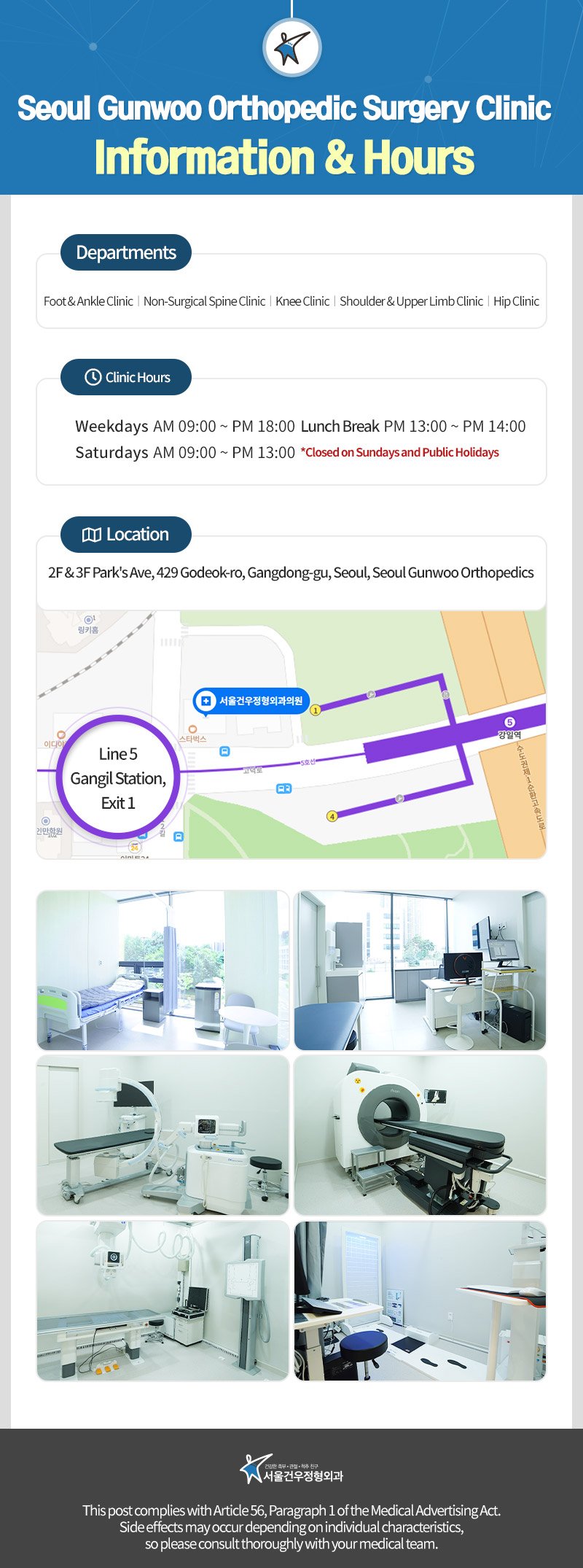
A.Seoul Gunwoo Orthopedic Surgery Clinic is at 2F-3F, 429, Godeok-ro, Gangdong-gu, Seoul, Republic of Korea. Call 02-426-9876 for appointment inquiries.
Clinic Information
| Clinic | Seoul Gunwoo Orthopedic Surgery Clinic |
|---|---|
| Specialty | Orthopedics |
| Address | 2F-3F, 429, Godeok-ro, Gangdong-gu, Seoul, Republic of Korea |
| Phone | 02-426-9876 |
| Website | https://seoulfoot.sillajewelry.com |
| Specialist | Specialist care |
 Seoul Gunwoo Orthopedic Surgery Clinic