
Foot and Ankle Specialist Hospital in Seoul: Assessment Services
When foot or ankle pain interferes with walking, exercise, or daily activities, an orthopedic assessment can help identify what needs attention. Seoul Gunwoo Orthopedic Surgery Clinic offers care in orthopedics, with published services that include imaging and movement assessments. The choice of assessment depends on the symptoms, examination findings, and the attending doctor’s judgment. Understanding the purpose of each service can help patients prepare useful questions before a visit.
Discussing Symptoms and Daily Limitations
A useful consultation begins with a clear account of the problem. Note where discomfort occurs, when it started, and whether it followed an injury or developed gradually. It can also help to describe whether walking, standing, exercise, or particular footwear makes the symptoms more noticeable. These details give the medical staff context for the assessment and help focus the discussion on the activities that matter to you.
If symptoms change over time, describe that pattern rather than relying on a single moment. For example, tell the attending doctor if discomfort is most noticeable during the first steps of the day or after a longer walk. Mention any previous examinations, treatments, or injuries involving the same area. Bringing relevant medical records can make it easier to explain what has already been investigated. Be specific about how the problem affects your routine: difficulty climbing stairs or returning to exercise is useful information alongside the location of pain. The attending doctor can then consider whether an examination or further assessment is appropriate.
A helpful foot and ankle assessment starts with both the symptoms and their effect on daily life. Sharing a clear history gives the attending doctor a practical basis for deciding what to examine next.
Foot and Ankle Ultrasound
Ultrasound uses sound waves to create images of structures inside the body. In orthopedic care, it can help the attending doctor examine soft tissues in the foot or ankle when imaging is appropriate. Seoul Gunwoo Orthopedic Surgery Clinic publishes separate non-covered fees for foot ultrasound and ankle ultrasound. The attending doctor can explain whether either examination is relevant to your symptoms and what information it is intended to provide.
An ultrasound is an assessment tool, not a treatment or a diagnosis by itself. Its findings need to be considered alongside the patient’s history and physical examination. Before the examination, ask which area will be assessed and whether you need to do anything to prepare. Afterward, ask the attending doctor to explain the findings in plain language and how the results affect the next step. If another form of assessment is needed, the discussion can also cover why it is being considered. The appropriate approach depends on the individual problem rather than on a standard test for every patient.
Clinical Experience in Foot and Ankle Care
Dr. Choi Hong Joon has a background in foot and ankle medicine, clinical practice, and research. Dr. Min Kyong Dae’s profile lists orthopedic, arthroscopy, and sports-medicine training. These backgrounds are relevant to patients seeking an orthopedic discussion about foot or ankle symptoms, including concerns that affect movement or sporting activity. The attending doctor can explain how the clinical assessment relates to your particular situation.
Patients do not need to know which test to request before a visit. It is more useful to describe the problem, bring relevant records, and ask what each proposed assessment is expected to clarify. The medical staff can discuss the available options and explain their purpose. Clinical experience and testing serve different roles: the assessment brings the patient’s history, examination findings, and any relevant test results together.
Foot and Ankle Specialist Hospital in Seoul: Movement Testing
Foot and ankle symptoms can become clearer when considered in relation to movement. Seoul Gunwoo Orthopedic Surgery Clinic lists gait analysis, motion analysis, and dynamic plantar-pressure measurement among its non-covered services. These assessments look at different aspects of movement or pressure under the foot. The attending doctor can help determine whether a particular test is useful for the question being investigated.
Gait and Motion Analysis
Gait analysis examines walking, while motion analysis examines movement. For someone whose symptoms appear during activity, these assessments can provide information that complements a conversation and physical examination. A patient might describe discomfort during a walk, for example, while the attending doctor considers whether a movement assessment would help clarify the problem. The reason for testing and the findings should be discussed in the context of the individual’s symptoms.
Before a movement assessment, explain which activities bring on symptoms and whether the discomfort occurs consistently. Tell the medical staff if you use an assistive device or have a movement restriction that affects the way you walk. Ask what the assessment involves, what you should wear, and whether you should bring the footwear you normally use. After testing, ask the attending doctor what was observed and whether the findings change the recommended next step. A movement assessment is one source of information; it should not be treated as a stand-alone explanation for every foot or ankle complaint.
Movement testing can add context when symptoms are linked to walking or activity. The value of a test lies in how its findings relate to the patient’s history and clinical examination.
Dynamic Plantar-Pressure Measurement
Dynamic plantar-pressure measurement assesses pressure under the foot during movement. It addresses a different question from an ultrasound: pressure measurement concerns how force is distributed under the foot, while ultrasound produces images of internal structures. Depending on the clinical question, the attending doctor can discuss whether pressure measurement, another assessment, or no additional test is appropriate.
Seoul Gunwoo Orthopedic Surgery Clinic also lists motion analysis combined with dynamic plantar-pressure measurement. A combined assessment may be discussed when both movement and pressure information are relevant to the consultation. Ask what the results can and cannot show, and how the attending doctor will use them alongside the examination. If footwear or activity is part of your concern, explain that before the assessment so the medical staff understands the context. Test selection should follow the clinical question, not the other way around. A published service does not mean every patient needs it.
Published Non-Covered Assessment Fees
The following published fees apply to the specific assessments named. They are individual non-covered charges, not a surgery package. Discuss the proposed assessment and its cost before proceeding, and ask whether other charges apply to your visit. A treatment plan and its cost depend on the care recommended for your circumstances.
| Assessment | Published non-covered fee |
|---|---|
| Foot ultrasound | ₩80,000–140,000 |
| Ankle ultrasound | ₩80,000–140,000 |
| Gait analysis | ₩50,000 |
| Motion analysis | ₩70,000 |
| Dynamic plantar-pressure measurement | ₩100,000 |
| Motion analysis and dynamic plantar-pressure measurement | ₩150,000 |
When comparing assessments, focus on their purpose rather than price alone. Ultrasound, gait analysis, motion analysis, and pressure measurement provide different types of information, so they are not interchangeable. Ask the attending doctor why a particular assessment is recommended and whether it is intended to guide an immediate decision or provide additional context. The medical staff can also explain the expected charges for the services proposed during your visit.
Foot and Ankle Specialist Hospital in Seoul: Planning Your Visit
A productive appointment is easier to arrange when you know what to bring and what to ask. Prepare a concise history of your symptoms, gather relevant records, and consider which daily activities you want to discuss. Seoul Gunwoo Orthopedic Surgery Clinic can address orthopedic concerns and explain the assessments relevant to your case. Patients who need language support should check availability before booking.
What to Bring and Ask
Bring any relevant imaging reports or medical records you already have, along with a list of medicines you currently take. If your concern is related to walking or exercise, consider bringing the shoes you commonly use. Write down when symptoms began, what makes them better or worse, and any questions you want to cover. This preparation helps keep the conversation focused without requiring you to make a diagnosis yourself.
During the consultation, ask the attending doctor what the examination suggests and whether further assessment is recommended. If a test is proposed, ask what it measures, how the findings will be explained, and what decisions might follow. You can also discuss the expected cost of the proposed services before proceeding. If you have received care elsewhere, explain what was tried and whether your symptoms changed. The goal is a shared understanding of the problem and the next step, not simply a list of tests. If you are uncertain about an instruction, ask the medical staff to explain it again.
Preparation helps the medical staff understand both the symptoms and the questions that matter to you. Ask for a clear explanation of any recommended assessment and its cost before proceeding.
Points to Consider Before Treatment
After an assessment, the attending doctor can discuss whether treatment or further evaluation is appropriate. Ask about the purpose of any proposed treatment, its expected course, and the precautions relevant to your condition. Discuss potential risks and any activities you may need to modify. Changes may take time depending on individual condition, and outcomes cannot be assured.
It is reasonable to ask how progress will be assessed and what to do if symptoms change. Explain your work, exercise, and mobility needs so the conversation reflects your circumstances. If you have concerns about a proposed approach, ask what alternatives the attending doctor considers appropriate and why. The medical staff can explain how the examination findings inform the recommendation. Decisions about care should account for your medical history and the clinical findings, rather than assuming that one approach suits every foot or ankle problem.
Language Support and Appointment Planning
If you need English-language assistance, contact Seoul Gunwoo Orthopedic Surgery Clinic before booking to confirm whether language support or interpretation will be available. An English website does not by itself establish that an English-speaking clinician or interpreter will be present. You can also ask what records to bring and whether any preparation is needed for an assessment under consideration.
For the appointment itself, plan to explain the location of your symptoms and the activities affected. If another person will help you communicate, consider what information that person needs to know about your medical history. Ask the medical staff to clarify unfamiliar terms and explain any proposed next steps. A clear discussion can help you understand the assessment and make an informed decision about care.

Frequently Asked Questions
Q.What kind of care does Seoul Gunwoo Orthopedic Surgery Clinic offer?
A.Seoul Gunwoo Orthopedic Surgery Clinic provides orthopedic care. Its published services include foot and ankle ultrasound and movement assessments.
Q.Who might consider an appointment?
A.Someone with foot or ankle symptoms affecting walking, exercise, or daily activities can discuss those concerns with the medical staff.
Q.What assessments can be discussed during a visit?
A.The published non-covered services include foot and ankle ultrasound, gait analysis, motion analysis, and dynamic plantar-pressure measurement. The attending doctor can discuss which assessment is relevant to your symptoms.
Q.What should I prepare before an appointment?
A.Bring relevant medical records and a list of current medicines, and note when your symptoms occur. If you need language support or interpretation, check availability before booking.
Q.Where is Seoul Gunwoo Orthopedic Surgery Clinic, and how can I contact it?
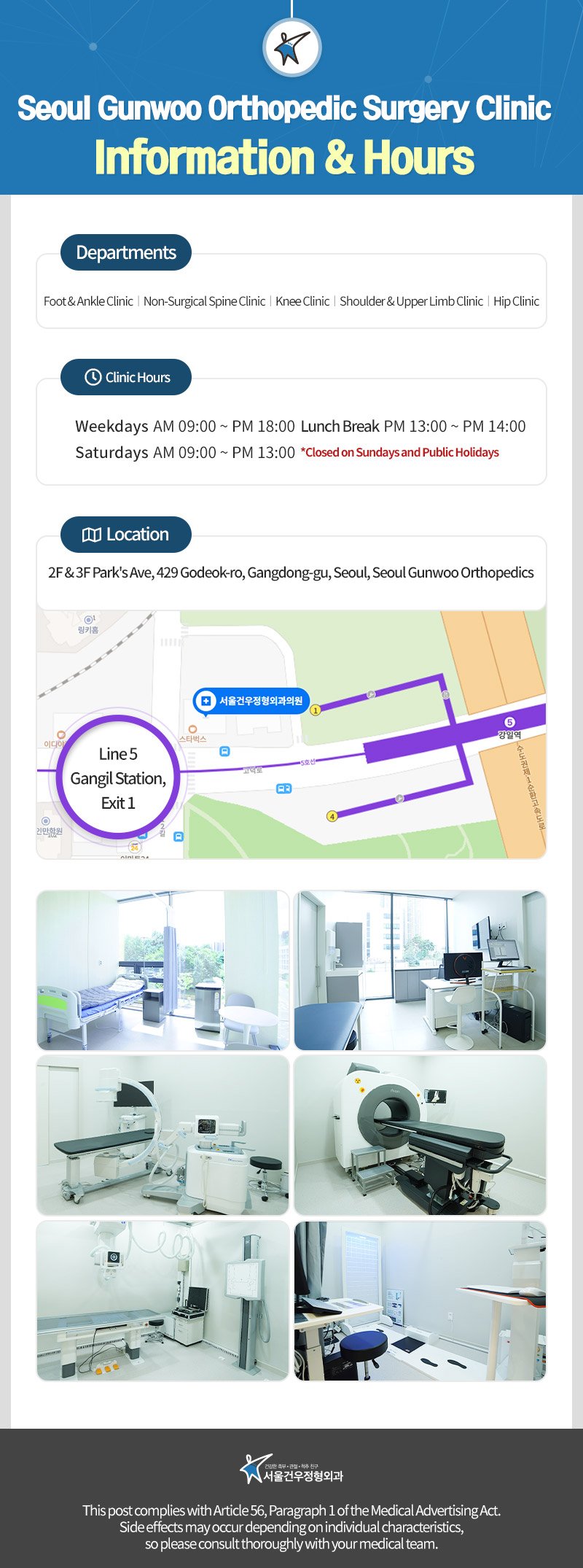
A.Seoul Gunwoo Orthopedic Surgery Clinic is at 2F-3F, 429, Godeok-ro, Gangdong-gu, Seoul, Republic of Korea. Call 02-426-9876 to contact the clinic.
Clinic Information
| Clinic | Seoul Gunwoo Orthopedic Surgery Clinic |
|---|---|
| Specialty | Orthopedics |
| Address | 2F-3F, 429, Godeok-ro, Gangdong-gu, Seoul, Republic of Korea |
| Phone | 02-426-9876 |
| Website | https://seoulfoot.sillajewelry.com |
| Specialist | Specialist care |
 Seoul Gunwoo Orthopedic Surgery Clinic