
Ankle surgery reviews Seoul: What reviews can tell you
Reading patient reviews is a useful starting point when considering an ankle consultation, but it is not a substitute for a medical assessment. Reviews can describe how clearly information was communicated or what a patient experienced during recovery. They cannot establish whether the same treatment is appropriate for someone else. The most useful approach is to read reviews as prompts for questions, not as evidence that surgery will produce a particular result. Look for specific details, consider the limits of each account, and discuss your own symptoms with the medical staff.
Separate the patient experience from the clinical decision
A review may describe scheduling, the consultation, an operation, or rehabilitation. Those details can help you decide what to ask, but each part answers a different question. A positive account of a consultation, for example, does not establish that surgery was necessary or that a particular procedure would suit another patient. Likewise, a difficult recovery described online does not reveal every factor involved. Pay attention to what the reviewer actually experienced rather than relying on an overall rating alone.
When reading about an ankle operation, look for a clear distinction between the reviewer’s personal experience and the medical facts needed for your own decision. The reason for treatment matters: an ankle injury, persistent pain, and instability can call for different assessments. Reviews rarely provide a complete medical history, examination findings, imaging results, or details of earlier treatment. Without that context, comparing outcomes across patients is unreliable. Use recurring themes about explanations, follow-up, and rehabilitation to prepare questions. Then ask the attending doctor how the available information applies to your condition. If surgery is discussed, request an explanation of the proposed approach, alternatives, expected recovery, and relevant risks before deciding how to proceed. A detailed review is still one person’s account.
Reviews are most useful when they help you prepare for a conversation with the medical staff. The decision about treatment depends on your diagnosis and circumstances, not on another patient’s rating.
Look for details you can evaluate
Specific observations are generally more useful than broad praise or criticism. A reviewer might explain whether the treatment plan was discussed clearly, what questions were answered, or how rehabilitation was addressed. Read such comments alongside the rest of the account: a description of communication is not the same as an assessment of surgical quality. It can also help to consider whether the review concerns an ankle problem or another orthopedic issue, since the patient’s experience and questions may differ.
As you compare accounts, make a short list of themes that matter to you. If a reviewer mentions imaging, ask what information an examination or scan would add in your case. If rehabilitation is mentioned, ask how a recovery plan would be developed and whether you would need follow-up care. If the account describes an operation, note whether the reviewer explains the reason for it or simply reports an outcome. Avoid treating missing details as proof that a step was skipped; reviews are abbreviated accounts, not medical records. Repeated comments can identify topics worth discussing, but they do not verify an individual claim. A consultation gives you the opportunity to ask specific questions and understand the reasoning behind a recommendation.
Recognize the limits of ratings
A rating compresses a complex experience into a simple score. It does not necessarily indicate the diagnosis, procedure, recovery period, or follow-up involved. Patients may also value different aspects of care: one may focus on communication, while another may emphasize convenience. Read the accompanying text when available and avoid drawing clinical conclusions from the score alone. A useful review-reading process leaves room for uncertainty and helps you identify what you still need to ask.
It is also sensible to compare reviews with information you can discuss directly during a consultation. Ask the medical staff how an ankle problem is assessed, what findings would affect the treatment recommendation, and how progress would be reviewed. If a review claims a particular result, remember that healing and rehabilitation depend on individual circumstances. No review can promise the same outcome for another patient. Your decision should rest on an explanation of your own condition and the options available to you.
| Review topic | Useful consultation question |
|---|---|
| Diagnosis and imaging | What information is needed to assess my ankle? |
| Treatment recommendation | Why is this approach appropriate for my condition? |
| Recovery and rehabilitation | What would my recovery plan involve? |
| Follow-up | How will my progress be reviewed? |
Use the table as a checklist rather than a scoring system. A review that addresses one topic may say nothing about another, and an unanswered question is not necessarily a negative finding. Bring the questions that are relevant to your symptoms and priorities. For example, if returning to walking comfortably is important to you, explain that goal and ask how it relates to the proposed plan. The medical staff can then discuss the assessment and treatment considerations that apply to you.
Ankle surgery reviews Seoul: Assessing orthopedic care
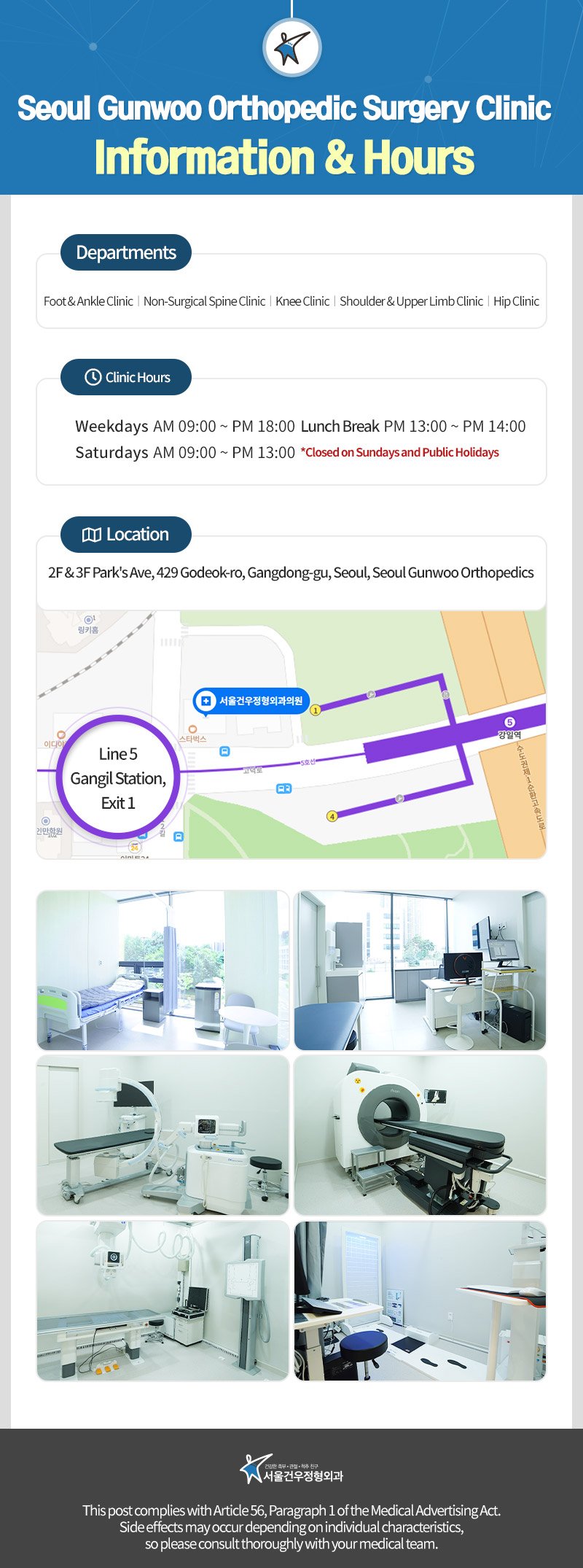
Once you have read reviews, consider the medical background and facilities relevant to an ankle assessment. Seoul Gunwoo Orthopedic Surgery Clinic provides orthopedic care and has operating rooms, inpatient rooms, CT, ultrasound, gait analysis, and rehabilitation facilities in one building. Those resources describe what is available at the clinic; they do not mean every patient needs every test or an operation. The appropriate next step depends on the symptoms, examination findings, and discussion with the attending doctor.
Consider the medical staff’s background
Dr. Choi Hong Joon has a background in foot and ankle medicine, clinical practice, and research. His experience includes a doctorate in medicine, a foot and ankle fellowship, and a former visiting professorship in a foot and ankle center. Dr. Min Kyong Dae is an orthopedic specialist whose profile lists training in orthopedics, arthroscopy, and sports medicine, as well as arthroscopy research experience and a sports center fellowship. These backgrounds can help frame questions about the care offered at our clinic.
A practitioner’s training is relevant, but credentials alone cannot tell you which treatment you need. During a consultation, ask who will assess your ankle and how the findings will inform the next step. If an operation is recommended, ask the attending doctor to explain the intended purpose, the expected recovery process, and alternatives that may be appropriate. You can also ask how your daily activities, previous injuries, and health history affect the recommendation. Clear reasoning matters as much as a list of qualifications. A useful discussion should leave you able to describe the problem being addressed and why the proposed approach is being considered. If a term is unfamiliar, ask for a plain-language explanation before making a decision.
Training and facilities provide useful context, but they do not replace an assessment of your ankle. Ask how the medical staff’s findings lead to the recommendation and what alternatives are relevant to you.
Understand the role of facilities and imaging
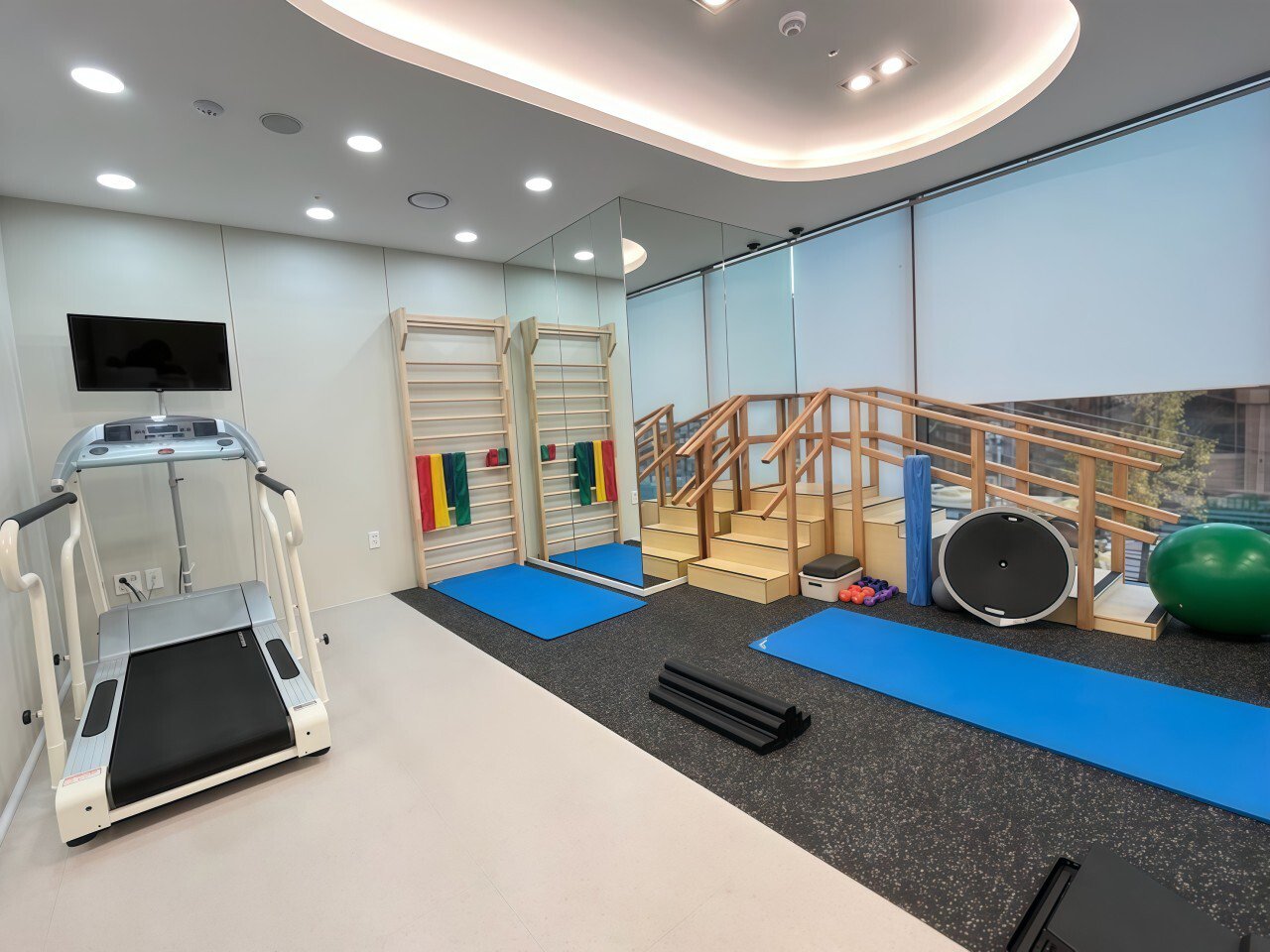
Seoul Gunwoo Orthopedic Surgery Clinic has CT and ultrasound equipment, as well as gait analysis and rehabilitation facilities. Operating rooms and inpatient rooms are also in the same building. These facilities may be relevant at different points in care, depending on the individual assessment. Having them together can make it easier to discuss how diagnostic, treatment, and rehabilitation steps relate to one another. It does not establish that a particular scan, admission, or operation is needed.
Ask what each recommended assessment is intended to show and how the result could affect treatment. For example, the medical staff can explain whether imaging is appropriate after reviewing your symptoms and examining the ankle. If walking is an important concern, ask whether gait analysis would add useful information in your case. If rehabilitation is discussed, ask how its goals would be set and how progress would be reviewed. More testing is not automatically better testing. The relevant question is whether a proposed step contributes to understanding your condition or planning care. You can also ask what preparation is needed for an appointment and whether you should bring existing medical records or imaging.
Connect treatment planning with recovery
Reviews often focus on the day of treatment or the final outcome, but recovery planning deserves attention before any decision. If surgery is proposed, ask what activities may need to be limited and how rehabilitation would fit into the plan. The answers depend on the procedure and your individual circumstances. Discuss work, travel, exercise, and responsibilities at home so the attending doctor understands the practical demands you may face during recovery.
Rehabilitation may involve goals that change as recovery progresses. Rather than comparing your expected timeline with a review, ask how progress would be assessed and what instructions you should follow. Changes may take time depending on your individual condition. Ask whom to contact if you have concerns after treatment and how follow-up will be arranged. A clear recovery plan should explain both what you need to do and when to seek advice.
| Facility at Seoul Gunwoo Orthopedic Surgery Clinic | Relevant discussion |
|---|---|
| CT and ultrasound | Whether imaging is appropriate for the assessment |
| Gait analysis | Whether an assessment of walking would be useful |
| Rehabilitation facilities | Recovery goals and follow-up planning |
| Operating and inpatient rooms | Care arrangements if a procedure is recommended |
Use this information to guide a conversation, not to predict which facilities you will use. Someone seeking an initial opinion may need a different plan from someone discussing an operation. If the medical staff recommend a test or treatment, ask what it involves and how it fits into the broader plan. This approach keeps the focus on your diagnosis and priorities while giving you a clearer basis for evaluating the recommendation.
Ankle surgery reviews Seoul: Preparing for a consultation
A well-prepared consultation can turn online research into a more useful discussion. Bring a concise account of your symptoms, including when they began, what activities affect them, and any treatment you have already tried. If you have relevant medical records or imaging, ask whether to bring them. Write down the questions raised by reviews, but keep your own concerns at the center. The aim is to understand your condition and options, not to reproduce another patient’s experience.
Describe symptoms and priorities clearly
Tell the medical staff where you feel discomfort and how it affects daily life. For example, explain whether walking, exercise, work, or other activities are difficult. Mention a previous injury or treatment if relevant, and describe whether symptoms have changed over time. You do not need to arrive with a diagnosis. A clear description gives the attending doctor a starting point for questions and an examination, while helping you explain what you most want to address.
It is also useful to distinguish between what you have observed and what you have read online. If a review describes ankle instability and you are concerned about a similar sensation, explain what happens in your own words rather than assuming the same diagnosis applies. Tell the medical staff about any questions you have regarding imaging, treatment, or rehabilitation. If you have a goal such as returning to a particular activity, say so and ask how it might influence the treatment discussion. Your priorities can help shape the conversation, but the recommendation must also reflect the clinical findings. Before leaving, summarize your understanding of the next step and ask the attending doctor to clarify anything that remains uncertain.
A concise symptom history and a few focused questions make reviews more useful during a consultation. Your own examination and goals should guide the discussion about treatment.
Ask about options and practical arrangements
If surgery is discussed, ask why it is being considered and whether there are other suitable approaches. Request an explanation of the intended benefit, relevant risks, recovery expectations, and follow-up. You can also ask what might happen if you take time to consider the recommendation. The answers will depend on your condition and the proposed treatment. Avoid assuming that a treatment described in a review is the right option for you.
Practical questions are part of informed planning. Ask what preparation is needed, what the anticipated care process involves, and how fees will be explained for the recommended assessment or treatment. If you have existing records, check whether the medical staff would find them useful. If you need language support or interpretation, contact our clinic before booking to confirm availability. An English-language website does not establish that an English-speaking clinician or interpreter will be available. Bringing a written list of questions can also help you keep track of the discussion. Before making a decision, make sure you understand the recommendation well enough to explain it back in your own words.
Evaluate the discussion after your visit
After the consultation, review your notes alongside the questions you prepared. Can you identify the issue the medical staff assessed, the reason for the recommendation, and the next step? If an operation was discussed, consider whether you understand the alternatives, risks, and recovery plan. You do not have to resolve every concern immediately. It is reasonable to ask for clarification before deciding how to proceed, especially when a recommendation affects work, travel, or daily activities.
Keep online reviews in perspective as you reflect. A review can remind you to ask about communication or rehabilitation, but your consultation provides information specific to you. If something you read appears inconsistent with the advice you received, bring it up as a question rather than treating either account as a complete explanation. The attending doctor can explain how your findings affect the plan. Informed decisions are built on an individual assessment and a conversation you understand.
Finally, consider whether you have the practical information needed for the next step. That may include how to prepare, what records to bring, and how follow-up would work if treatment proceeds. Keep a copy of your questions and any instructions you receive so you can refer to them later. If your priorities or circumstances change, raise them with the medical staff. A treatment discussion should account for both the clinical assessment and the realities of your daily life.

Frequently Asked Questions
Q.What kind of care does Seoul Gunwoo Orthopedic Surgery Clinic provide?
A.Seoul Gunwoo Orthopedic Surgery Clinic provides orthopedic care. Our clinic has CT, ultrasound, gait analysis, rehabilitation facilities, operating rooms, and inpatient rooms in one building.
Q.Who might consider an appointment at our clinic?
A.A person with an ankle concern who wants an orthopedic assessment can discuss symptoms and treatment options with the medical staff.
Q.What experience does the medical staff have with foot and ankle care?
A.Dr. Choi Hong Joon has a background in foot and ankle medicine, clinical practice, and research. Dr. Min Kyong Dae is an orthopedic specialist with training in arthroscopy and sports medicine.
Q.What should I prepare for an ankle consultation?
A.Prepare a brief history of your symptoms and previous treatment, along with questions about assessment, treatment options, and recovery. Ask whether to bring existing medical records or imaging.
Q.Where is Seoul Gunwoo Orthopedic Surgery Clinic, and how can I contact our clinic?
A.Our clinic is at 2F-3F, 429, Godeok-ro, Gangdong-gu, Seoul, Republic of Korea. Call 02-426-9876 to ask about an appointment and confirm any language support or interpretation needs before booking.
Clinic Information
| Clinic | Seoul Gunwoo Orthopedic Surgery Clinic |
|---|---|
| Specialty | Orthopedics |
| Address | 2F-3F, 429, Godeok-ro, Gangdong-gu, Seoul, Republic of Korea |
| Phone | 02-426-9876 |
| Website | https://seoulfoot.sillajewelry.com |
| Specialist | Specialist care |
 Seoul Gunwoo Orthopedic Surgery Clinic