

Recommended hospital for ankle surgery in Seoul: understanding your options
Ankle pain can arise from different structures, including ligaments, tendons, cartilage, or bone. The appropriate care depends on the cause, the effect on movement, and the individual’s medical circumstances. Seoul Gunwoo Orthopedic Surgery Clinic provides orthopedic care for ankle conditions and lists surgical services for ligament injuries, Achilles tendon injuries, cartilage concerns, arthritis, and fractures. Choosing where to seek care starts with understanding the specific ankle problem, not with assuming that surgery is necessary. An evaluation can help clarify which options are relevant to your symptoms.
Conditions that may call for ankle assessment
Persistent pain, a feeling of instability, restricted movement, or difficulty bearing weight can be reasons to seek an orthopedic assessment. These symptoms do not point to one diagnosis on their own. Ankle ligament injuries, Achilles tendon problems, cartilage conditions, arthritis, and fractures can each require different considerations. Describe when the symptoms began and which movements aggravate them so the medical staff can understand how the problem affects everyday activity.
It is also useful to explain whether symptoms followed an injury or developed over time. A history of repeated ankle giving-way, swelling, or difficulty walking may help frame the discussion, but it does not establish a diagnosis by itself. The clinic’s published surgical work includes ankle ligament repair and reconstruction, Achilles tendon repair, ankle cartilage, ankle arthritis, and fractures. These services indicate areas of care, not a promise that a particular procedure will be suitable. Assessment should connect the reported symptoms with the suspected condition and possible care options.
Different ankle symptoms can have different causes, so a clear assessment is the first step in discussing treatment. The clinic lists care for several ankle conditions, including surgical options, but the appropriate approach depends on the individual case.
When surgery enters the discussion
Surgery is one possible part of ankle care, but the presence of pain does not automatically mean an operation is needed. The decision depends on the condition and the findings of an assessment. At Seoul Gunwoo Orthopedic Surgery Clinic, published surgical work includes ankle ligament repair and reconstruction, Achilles tendon repair, and procedures involving ankle cartilage, arthritis, and fractures. A consultation is the place to discuss whether any of these services relate to your situation.
When considering an operation, ask what condition is being treated and why the proposed approach is being considered. Clarify the expected purpose of the procedure, what alternatives may be appropriate, and what factors affect recovery planning. The answers should relate to your specific diagnosis rather than to a general description of ankle surgery. Make sure you understand the intended benefit and the practical steps involved before making a decision. Changes in symptoms and function may take time and can depend on individual condition, so ask what follow-up and activity guidance would apply to your case.
Matching the discussion to the ankle problem
Ankle ligament care and Achilles tendon care address different structures and should not be treated as interchangeable. Cartilage concerns, arthritis, and fractures also require condition-specific discussion. Describing the location of pain, the movements that trigger it, and any relevant injury helps keep the consultation focused. Bring any questions about daily activity or mobility that you want addressed.
For a useful consultation, organize your main concerns before the visit. Note how symptoms affect walking, exercise, work, or other routines, and mention whether the problem is changing. Ask which findings support the working diagnosis and what options are being considered. This approach can help you compare the potential role of non-surgical care with a surgical discussion where appropriate. It also helps distinguish the general service list from a plan tailored to your ankle. Clear questions are especially important when several structures may contribute to pain or instability.
Seoul Gunwoo Orthopedic Surgery Clinic also provides care for bunions, heel pain, and plantar fasciitis. Its published approach to heel pain and plantar fasciitis includes assessment, stretching, shockwave therapy, and discussion of persistent symptoms. These services are distinct from ankle surgery, but they illustrate why identifying the source of foot or ankle discomfort matters. If pain is difficult to localize, explain the full pattern of symptoms rather than assuming that the ankle is the only area involved.
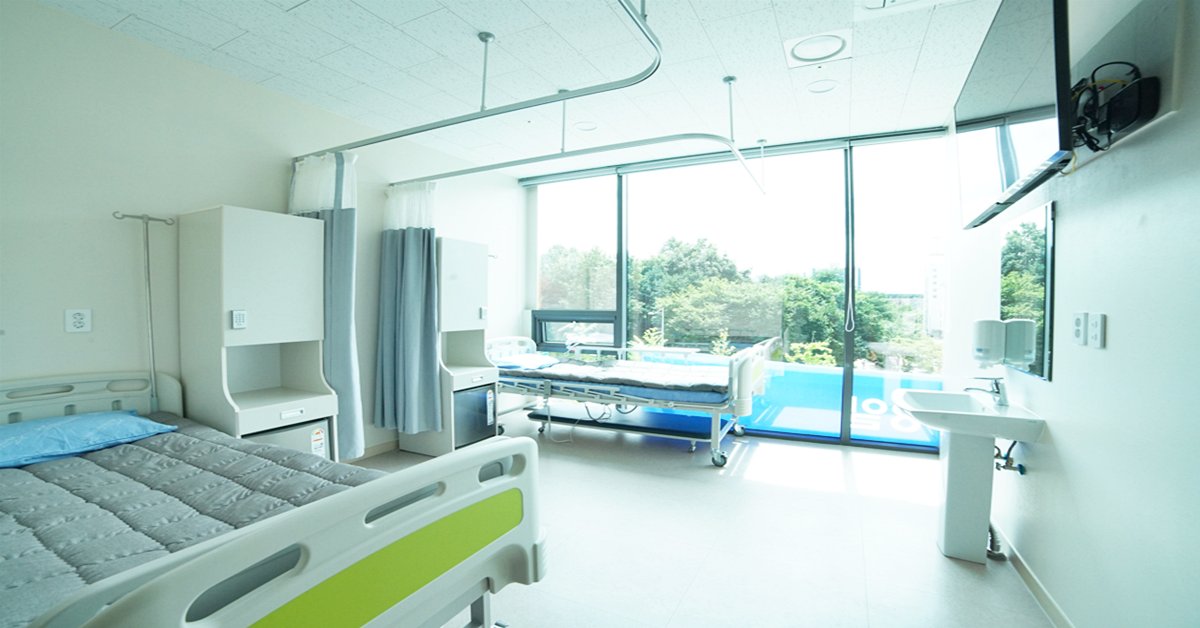
Recommended hospital for ankle surgery in Seoul: treatment and preparation
Preparing for an orthopedic consultation can make it easier to discuss symptoms, possible treatment, and next steps. Start by describing the problem in practical terms: where it hurts, what movements are difficult, and how the issue affects daily life. Seoul Gunwoo Orthopedic Surgery Clinic lists assessment and care across several foot and ankle concerns, as well as surgical services for specific ankle conditions. A focused conversation helps connect those services to the individual reason for seeking care.
What to bring up during an appointment
Explain whether the ankle problem began after an injury or appeared gradually, and describe any changes in pain or movement. If walking, stairs, exercise, or standing are difficult, mention which activities are affected. These details help the medical staff understand the practical impact of the symptoms. You can also bring a written list of questions so you remember to discuss concerns about diagnosis, treatment options, and follow-up.
Ask what condition the assessment suggests and what information supports that view. If surgery is raised, clarify the purpose of the proposed procedure, what it is intended to address, and what other options may be considered. The clinic’s published surgical work includes ligament repair and reconstruction, Achilles tendon repair, and work involving ankle cartilage, arthritis, and fractures. These descriptions provide context for a discussion, but they do not determine an individual treatment plan. Use the appointment to understand how the clinician’s recommendations relate to your own findings and goals.
Arrive ready to describe how the ankle problem affects your movement and daily routine. If surgery is discussed, ask how the proposed procedure relates to your diagnosis and what the next steps would involve.
Understanding assessment and supportive care
Not every foot or ankle concern is managed with surgery. For heel pain and plantar fasciitis, the clinic describes assessment, stretching, shockwave therapy, and discussion of symptoms that persist. The appropriate options depend on the condition being evaluated. For ankle problems, ask what the assessment indicates before drawing conclusions from a general list of services or assuming that one treatment applies to every person.
Supportive care should be discussed in relation to the specific symptoms and diagnosis. For example, an approach described for heel pain should not be assumed to apply to a ligament injury or fracture. If symptoms continue, explain what has changed and which activities remain difficult. When an ankle operation is being considered, ask how the decision relates to the condition identified and what follow-up discussions are expected. Keep the conversation centered on the diagnosis, the purpose of each option, and the expected care plan. This makes it easier to understand the distinction between general services and recommendations for your case.
Fees and practical planning
Some listed non-covered fees relate to assessment or measurement rather than surgery. The clinic lists ankle ultrasound and foot ultrasound at KRW 80,000–140,000 each. Other listed non-covered services include gait analysis, motion analysis, and dynamic plantar-pressure measurement. These charges are separate items, not a bundled ankle surgery price. Ask which assessments are relevant to your case and whether a listed fee applies before proceeding.
When planning financially, separate assessment fees from charges related to an operation or hospital stay. The clinic’s published non-covered fees include specific imaging and measurement services, as well as room surcharges. The figures below identify the corresponding listed items; they should not be interpreted as a surgery package or a full estimate of treatment costs. For an individual plan, discuss which services are recommended and how the charges apply. Confirm the exact items relevant to your care before making financial plans.
Non-covered fees can be useful to understand in advance, but a list of selected charges is not a complete estimate for every patient. Whether an assessment or room option is relevant depends on the care plan. Ask about the items connected to your own consultation or treatment rather than assuming that every listed service will be required. Surgery costs are not presented here as a package price.
| Listed non-covered item | Fee |
|---|---|
| Ankle ultrasound | KRW 80,000–140,000 |
| Foot ultrasound | KRW 80,000–140,000 |
| Gait analysis | KRW 50,000 |
| Motion analysis | KRW 70,000 |
| Dynamic plantar-pressure measurement | KRW 100,000 |
| Motion analysis and dynamic plantar pressure | KRW 150,000 |
| Single-room surcharge | KRW 200,000 |
| Twin-room surcharge | KRW 100,000 |
| Special single-room surcharge | KRW 250,000 |
These are selected non-covered charges and should be read only as fees for the specific items named. They do not represent the total cost of ankle surgery or a treatment estimate. An English medical certificate is also listed at KRW 20,000. For an accurate understanding of any charge, discuss the services recommended for your case and clarify which items are included in your care plan.
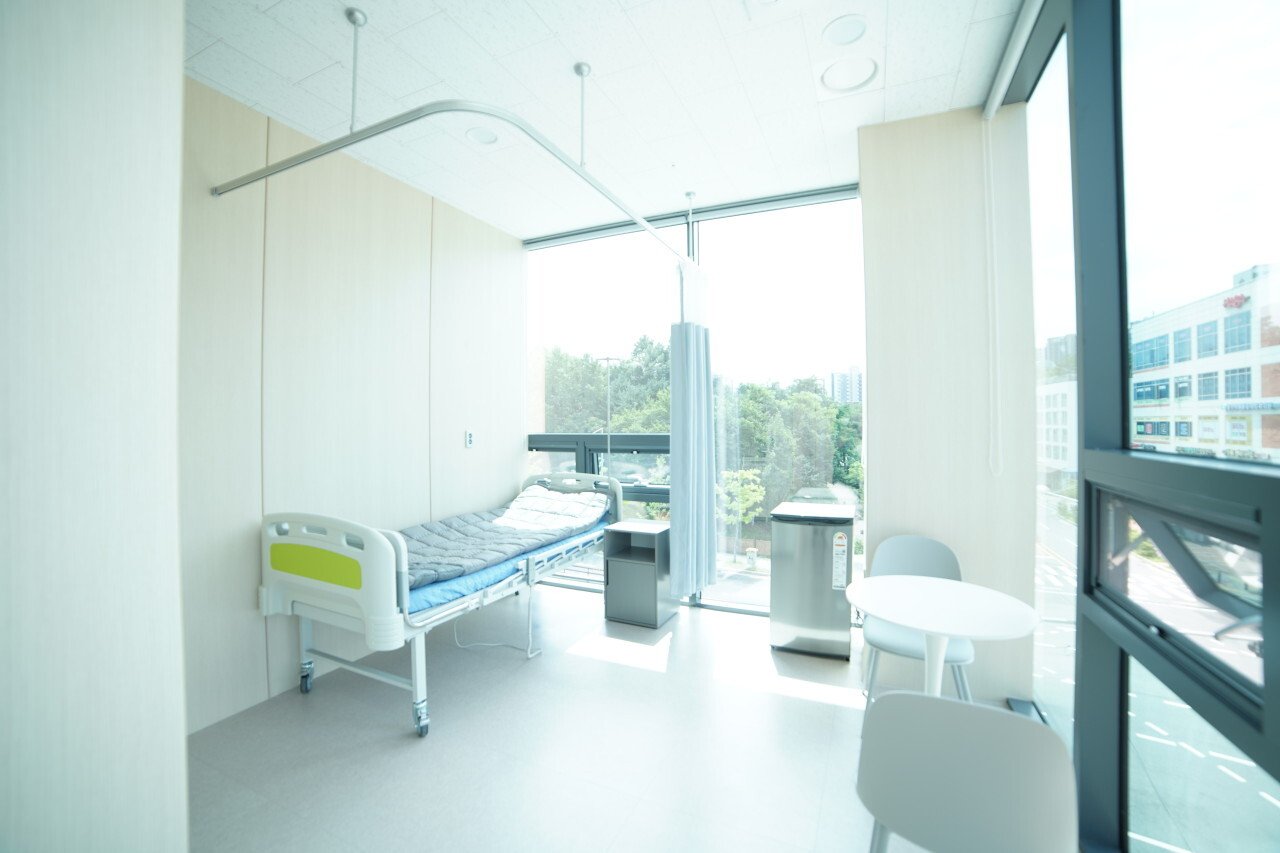
Recommended hospital for ankle surgery in Seoul: location and next steps
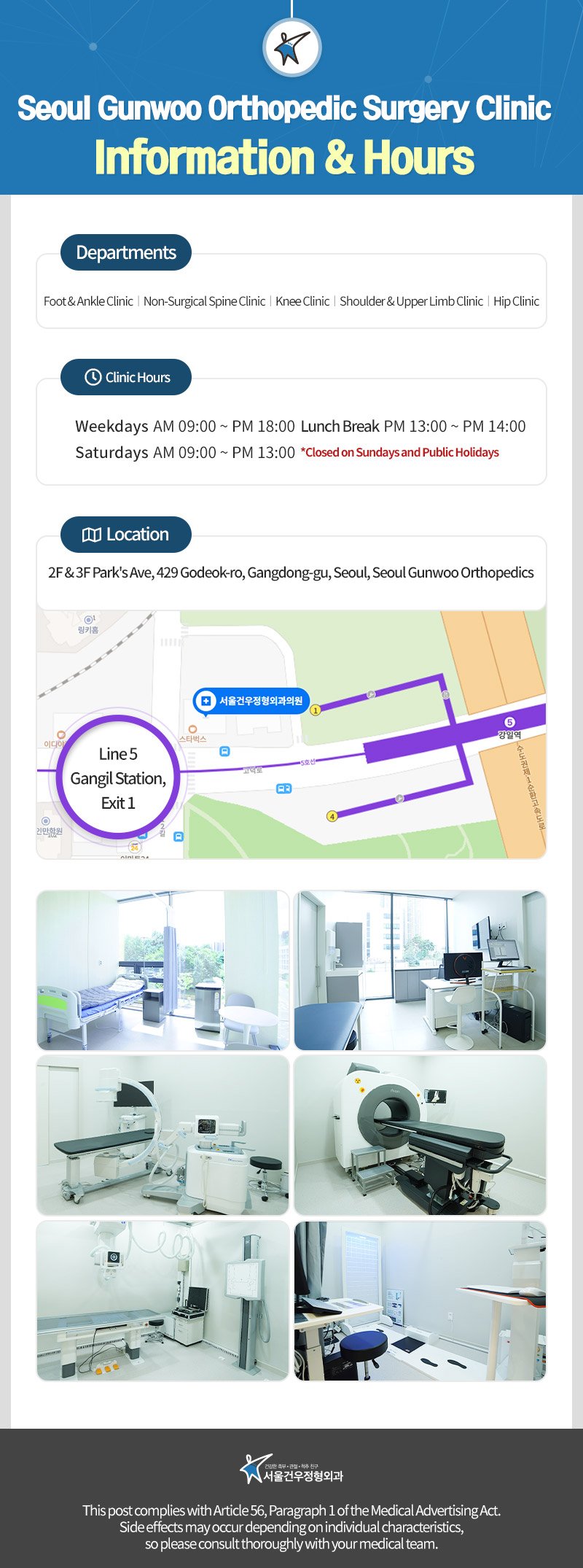
For people considering ankle care in Seoul, practical details matter alongside the clinical discussion. Seoul Gunwoo Orthopedic Surgery Clinic is an orthopedic clinic at 2F-3F, 429, Godeok-ro, Gangdong-gu, Seoul, Republic of Korea, in front of Gangil Station Exit 1. Its services include care for foot and ankle conditions and published surgical work for selected ankle problems. Before visiting, organize your symptom history and questions so you can use the appointment to discuss the care most relevant to you.
Finding the clinic and arranging contact
Seoul Gunwoo Orthopedic Surgery Clinic is located on the second and third floors at 429 Godeok-ro in Gangdong-gu, Seoul, in front of Gangil Station Exit 1. The clinic’s phone number is 02-426-9876. Contact the clinic to ask about arranging a visit and to clarify practical details for your consultation. Bring your questions about the ankle symptoms, assessment, and any treatment options you want to understand.
When planning a visit, consider what information will help explain your concern clearly. Be prepared to describe how long the symptoms have been present, what movements are difficult, and whether the problem followed an injury. If you are considering surgery, write down questions about the proposed procedure and the next steps. A clear account of your symptoms supports a more focused conversation. The medical staff can discuss the care options relevant to the assessment rather than relying on a general description of ankle surgery.
Location and contact details can help you plan a visit, but the consultation should remain centered on your ankle condition. Bring a clear symptom history and ask how any suggested treatment relates to your diagnosis.
Choosing questions that clarify your options
Useful questions focus on the suspected condition, how it affects movement, and what options may be appropriate. If a surgical procedure is discussed, ask what it is intended to address and how the recommendation relates to your assessment. You can also ask what follow-up or activity guidance will be part of the care plan. These questions help turn a broad discussion about ankle surgery into a practical conversation about your individual needs.
Keep expectations grounded in the assessment. Ankle ligament repair or reconstruction, Achilles tendon repair, and procedures involving cartilage, arthritis, or fractures address different clinical concerns. A service being listed does not mean it is suitable for every person with ankle pain. If you are uncertain about a recommendation, ask for a clear explanation of its purpose and alternatives. Understanding why an option is being considered is an important part of informed decision-making. Changes in symptoms may take time depending on individual condition, so discuss how progress would be reviewed.
Matching the visit to your concerns
Differentiate between the main issue you want assessed and secondary concerns that may affect movement. For instance, ankle instability, heel pain, and discomfort associated with plantar fasciitis are not identical problems. The clinic lists care for each of these areas, but the assessment should establish which concern is relevant. Be specific about where discomfort occurs and what makes it worse.
If the ankle has been injured or symptoms have persisted, explain the timeline and how your function has changed. Ask which assessment or treatment options the medical staff considers relevant and what each is intended to clarify or address. For cost questions, distinguish selected non-covered assessment fees from the cost of surgery, which is not given as a package price here. Clear, case-specific questions help you leave with a better understanding of the next step.
Seoul Gunwoo Orthopedic Surgery Clinic provides orthopedic care for foot and ankle concerns, with published surgical work covering several ankle conditions. Its listed services also include bunion care, heel pain, and plantar fasciitis care. Use the appointment to discuss the condition that best matches your symptoms, rather than assuming that all foot and ankle problems need the same approach. Contact the clinic at 02-426-9876 for visit-related questions and use the address above to plan your route.

Frequently Asked Questions
Q.What kind of clinic is Seoul Gunwoo Orthopedic Surgery Clinic?
A.Seoul Gunwoo Orthopedic Surgery Clinic is an orthopedic clinic providing care for foot and ankle conditions. Its published surgical work includes ankle ligament repair and reconstruction, Achilles tendon repair, and procedures involving ankle cartilage, arthritis, and fractures.
Q.Who may want an ankle assessment?
A.People with persistent ankle pain, instability, restricted movement, or difficulty bearing weight may seek an orthopedic assessment. These symptoms do not establish a diagnosis, so discuss their pattern and effect on daily activity with the medical staff.
Q.What ankle procedures does Seoul Gunwoo Orthopedic Surgery Clinic list?
A.Its published surgical work includes ankle ligament repair and reconstruction, Achilles tendon repair, and procedures involving ankle cartilage, arthritis, and fractures. The appropriate option depends on the individual assessment.
Q.What should I know about the listed fees?
A.Selected non-covered fees include ankle ultrasound at KRW 80,000–140,000 and foot ultrasound at KRW 80,000–140,000. These are specific service fees, not a package price for ankle surgery.
Q.Where is Seoul Gunwoo Orthopedic Surgery Clinic, and how can I contact it?
A.The clinic is at 2F-3F, 429, Godeok-ro, Gangdong-gu, Seoul, Republic of Korea, in front of Gangil Station Exit 1. Call 02-426-9876 for visit-related questions.
Clinic Information
| Clinic | Seoul Gunwoo Orthopedic Surgery Clinic |
|---|---|
| Specialty | Orthopedics |
| Address | 2F-3F, 429, Godeok-ro, Gangdong-gu, Seoul, Republic of Korea |
| Phone | 02-426-9876 |
| Website | https://seoulfoot.sillajewelry.com |
| Specialist | Specialist care |
 Seoul Gunwoo Orthopedic Surgery Clinic